


Developers, public agencies, and other project sponsors subject to California Environmental Quality Act (CEQA) vehicle miles traveled (VMT) analysis have a new option for mitigating significant transportation impacts. The Governor’s Office of Land Use and Climate Innovation (LCI) has released the final version of the Statewide Vehicle Miles Traveled Mitigation Program Guidance (Guidance) implementing Assembly Bill 130 (2025), which created a new statewide mitigation program that allows eligible projects to satisfy VMT mitigation requirements by contributing to a state-administered fund rather than relying solely on project-specific measures.
It is intended to advance California’s broader goal of reducing emissions by directing mitigation funding to affordable housing in transit-oriented communities, where new development can generate measurable VMT reductions.
For projects where on-site or local VMT mitigation is difficult, costly, or impractical, the new program may provide a more predictable path to CEQA compliance. While the initial phase of this new statewide program is limited to public works projects, we anticipate that it will be expanded over time to also include privately funded development projects.
The mitigation program is premised on the concept that building affordable housing reduces VMT, especially when affordable units are located in accessible, mixed-use neighborhoods. Thus, instead of designing and implementing on-site VMT reduction strategies, applicants may now elect to pay into the California Department of Housing and Community Development’s (HCD) Transit-Oriented Development Implementation Fund (TDIF), which is used to support the development of affordable housing. (See Health and Safety Code § 53561.)
AB 130 does not restrict the mitigation program to certain types of projects. Any CEQA project with a significant VMT impact is potentially eligible to participate in the mitigation program. However, to allow HCD to effectively manage program demand without overwhelming its current administrative capacity, the initial phase focuses on publicly funded projects.
This program is a significant development for any project subject to CEQA VMT analysis, particularly:
The program is voluntary. It supplements rather than replaces existing mitigation options, giving applicants flexibility to use it alone or in combination with other strategies.
Our Land Use & Development team is closely monitoring this program and its forthcoming rulemaking. We can assist clients in evaluating whether this mitigation pathway is appropriate for specific projects, calculating anticipated contribution amounts, and integrating this option into CEQA strategies and project approvals.

Shawna has a broad environmental law practice, focusing on land use, project siting, and litigation. She advises clients on a wide range of complex environmental regulatory matters, including compliance with the California Environmental Quality Act (CEQA), National Environmental Policy Act (NEPA), California Coastal Act, Housing Accountability Act, Clean Water Act, Endangered Species Act, and other state and federal regulatory requirements. She also has significant experience with environmental litigation.
Shawna graduated from the UCLA School of Law, completing specializations in Environmental Law and the David J. Epstein Program in Public Interest Law & Policy. In addition, she served as an editor for the Journal of Environmental Law & Policy and on the Board of Law Women of UCLA. She previously served as a law clerk for the Environmental Enforcement Section of the U.S. Department of Justice.
Shawna has a broad environmental law practice, focusing on land use, project siting, and litigation. She advises clients on a wide range of complex environmental regulatory matters, including compliance with the California Environmental Quality Act (CEQA), National Environmental Policy Act (NEPA), California Coastal Act, Housing Accountability Act, Clean Water Act, Endangered Species Act, and other state and federal regulatory requirements. She also has significant experience with environmental litigation.
Shawna graduated from the UCLA School of Law, completing specializations in Environmental Law and the David J. Epstein Program in Public Interest Law & Policy. In addition, she served as an editor for the Journal of Environmental Law & Policy and on the Board of Law Women of UCLA. She previously served as a law clerk for the Environmental Enforcement Section of the U.S. Department of Justice.
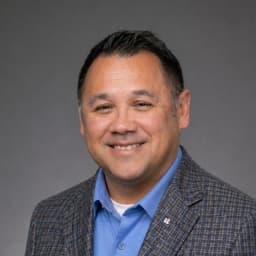
Daniel “Rock” Rockholt is a seasoned urban, educational and military facilities planner with over 25 years experience working in both the public and private sectors for urban, regional, military and educational facilities master planning. The depth of his knowledge is rooted in his widespread experience and ranges from resiliency, climate-action planning (in relation to urban and transportation systems), educational facilities planning, and operational planning.
In addition to his highly successful career as a master planner, Daniel’s impressive military background includes serving as Deputy Director of Intelligence Operations, Situational Awareness Room (SAR), and RS HQ. In his over 30 years of service, “Rock” was a monumental leader in his held positions as Assistant Chief-of-Staff, Department Head, Division Officer and Intelligence Federation Manager.
Daniel is also an established artist as an award-winning photographer specializing in architectural, nature, landscape, and fine art photography with works in galleries and museums in California and abroad.
Daniel “Rock” Rockholt is a seasoned urban, educational and military facilities planner with over 25 years experience working in both the public and private sectors for urban, regional, military and educational facilities master planning. The depth of his knowledge is rooted in his widespread experience and ranges from resiliency, climate-action planning (in relation to urban and transportation systems), educational facilities planning, and operational planning.
In addition to his highly successful career as a master planner, Daniel’s impressive military background includes serving as Deputy Director of Intelligence Operations, Situational Awareness Room (SAR), and RS HQ. In his over 30 years of service, “Rock” was a monumental leader in his held positions as Assistant Chief-of-Staff, Department Head, Division Officer and Intelligence Federation Manager.
Daniel is also an established artist as an award-winning photographer specializing in architectural, nature, landscape, and fine art photography with works in galleries and museums in California and abroad.
Patrick Ross, Senior Manager of Marketing & Communications
EmailP: 619.906.5740
Suzie Jayyusi, Senior Marketing Coordinator Events Planner
EmailP: 619.525.3818
Francisco Sanchez Losada, Marketing and Client Relations Manager
EmailP: 619.515.3225
Sanae Trotter, Senior Manager for Client Relations
EmailP: 650.645.9015